Imperial Wagyu Kobe Beef - Kobe Style Beef, and Traditional Japanese Kobe Beef

History of Wagyu Beef

Cattle were first introduced into Japan around the 2nd century, brought in from the Asian mainland, via the Korean Peninsula.  The cattle provided a much needed source of agricultural power, power to pull the plows for the cultivation of rice, power for the growth of a nation.  The Shikoku region received the first imports, but because of rugged terrain impairing travel in the region, further migration of the cattle was slow.  The cattle were in isolated areas, each essentially a closed population.  Generally segregated by topography, those animals were the ancestors of today's Japanese Wagyu breed of cattle.

The word Wagyu (pronounced wa-gyou) translated literally means Japanese, or Japanese-style cattle.  Interestingly, there was a sound reason for breeding the Wagyu cattle for use only as draft animals, or beast of burden, at the time Japanese religion prohibited the consumption of beef.  But all that changed when an innovative Japanese military leader predicted diets rich in beef would make for significantly stronger soldiers, and a successful campaign waged by the general's beef-strengthened troops served to validate his point.  From that time forward, beef was a mandated part of the Japanese military diet in time of war--it gave them strength.

Not surprisingly, when the triumphant, beef-fed soldiers returned to their homes and to their farms, they brought with them an appetite for beef.  That appetite was a problem--Japanese elders still embraced their traditional beliefs.  Cooking and consuming beef inside the home was considered a sacrilege, and desecration of the house, and was therefore forbidden.

With no alternatives and not wishing desecration of the house by consuming beef inside, when the young farmers broke for their midday meal they heated their plowshares over hot coals and cooked their beef outside, in the rice fields.  Thus was born the tradition of Japanese "Plow Share Cooking."

Recognizing their opportunity, pioneering breeders began selectively breeding their herds for human consumption.  Some of those early genetic records survive till today in the Wagyu herd books dating back to the 1830's.  The Japanese herds were opened for limited crossbreeding from 1868 to 1910.  Breeding stock of Brown Swiss, Shorthorn, Devon, Simmental, Aryshire, Korean, Holstein, and Angus, each made their genetic contribution to the Wagyu strain.

When regional variations in the cattle became greater than desired, it was decided that crossbreeding had not been beneficial, so in the early 1900's the herds were closed once again to outside bloodlines.  Since that time, the breed has been monitored closely by the Japanese Wagyu Registry who meticulously maintain genetic and growth data on all cattle.

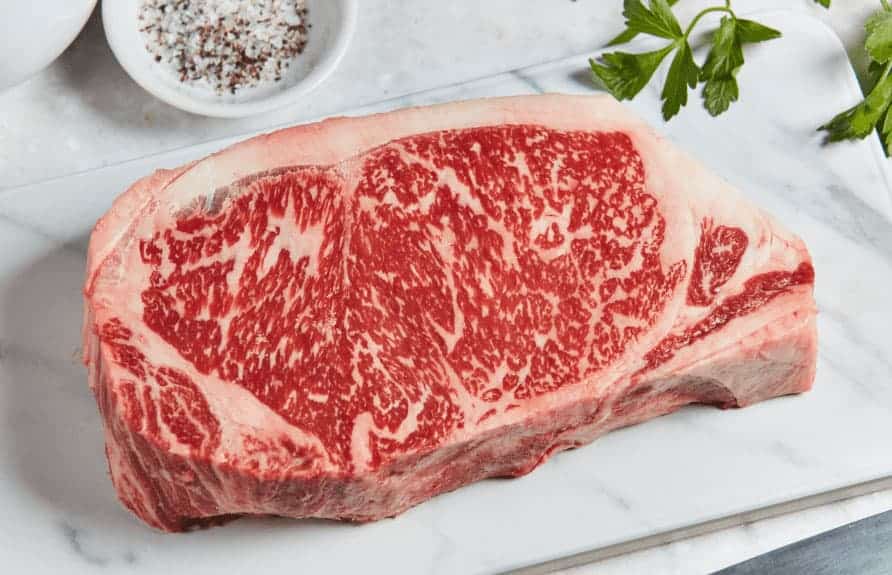
The herds were developed with the emphasis on quality--Wagyu produce consistenly marbled, low-cholesterol beef, recognized as the world's finest, unmatched flavor, tenderness, and overall eating quality.  Very protective of the breed, Japan has recognized what they have and classified the Wagyu as a national treasure.


Wagyu Ribeyes
Package of two 8 oz. Wagyu Ribeyes, a total of 16 oz. of delicious Wagyu beef.
$65.00


Wagyu Tenderloin Filets
Package of four 6 oz Wagyu Tenderloin Filets, a total of 24 oz of Wagyu beef.
$98.00


Wagyu NY Strip Steaks
Two 12 oz. Wagyu NY Strips. a total of 24 oz. of flavorful Wagyu beef.
$85.00


© 2009 - Imperial Wagyu Beef® - All rights reserved.

Custom Website Design and Hosting by Nebraska Networks.